Keep selling when the internet drops.

The whole shop runs on the computer at your counter, in Arabic or English, in dollars and lira.

The till mid-sale: six items in the basket, 11.80 dollars, 1,056,100 lira, with quick-pick tiles below.
Sells with the cable pulled No internet, no cloud, no waiting on a spinner.
English and العربية A real right-to-left layout, not a translated list.
Light, dark, or whatever Windows says A true-black night mode for a dim shop at 11 p.m.
Dollars and lira together Every price, every receipt, both currencies at once.

Your language. Your light.

Everything mirrors: the basket, the totals, the shortcuts. Arabic gets its own typeface and its own spacing, and the true-black theme is made for a dim shop at night. Try the switches: these are the same buttons the till has.

The till in English with the light theme.

Fast enough for the evening rush.

Scan it, weigh it, or tap the tile. Everything a cashier reaches for is one key away, F2 to search and F9 to take the money, and the catalogue is colour-coded, so the eye finds the bread before the hand finds the barcode.

  • Quick-pick tiles for the bread, produce and cigarettes that carry no barcode
  • Weighed goods and scale labels, priced per kilo without a second thought
  • Park a basket when someone runs back for milk, and pick it up where you left it
Quick picks on the till: tiles for bread, croissants, eggs, cola and water, grouped by colour-coded category.
Quick picks: one tap for the things that never had a barcode.

However they pay, it adds up.

Split one bill across cash, an app and the customer’s account. Put it on the tab and settle it at the end of the week. The payment methods are yours to name.

  • Cash
  • Whish
  • OMT
  • Card
  • On account
  • Split pay
  • The drawer springs open on the sale, fired through the printer’s pulse the moment cash is taken
  • Refunds line by line, not all or nothing

What the shop earned, not just what it sold.

Purchases, suppliers and expenses live next to the sales, so the profit figure is the real one. Goods bought for resale count as stock and become a cost the day they sell.

  • Takings, margin, average basket, busiest hour, per cashier, per shift, or across the whole shop
  • Profit and cash-flow statements, built from real purchases and real bills
  • Purchase orders and supplier balances, from ordered to received to paid
Reports in the dark theme: net takings, profit, orders and average basket, a takings-and-profit chart by day, and sales by category.

The parts you only miss when they’re gone.

None of this shows up in a demo. All of it shows up in the first month a shop is open.

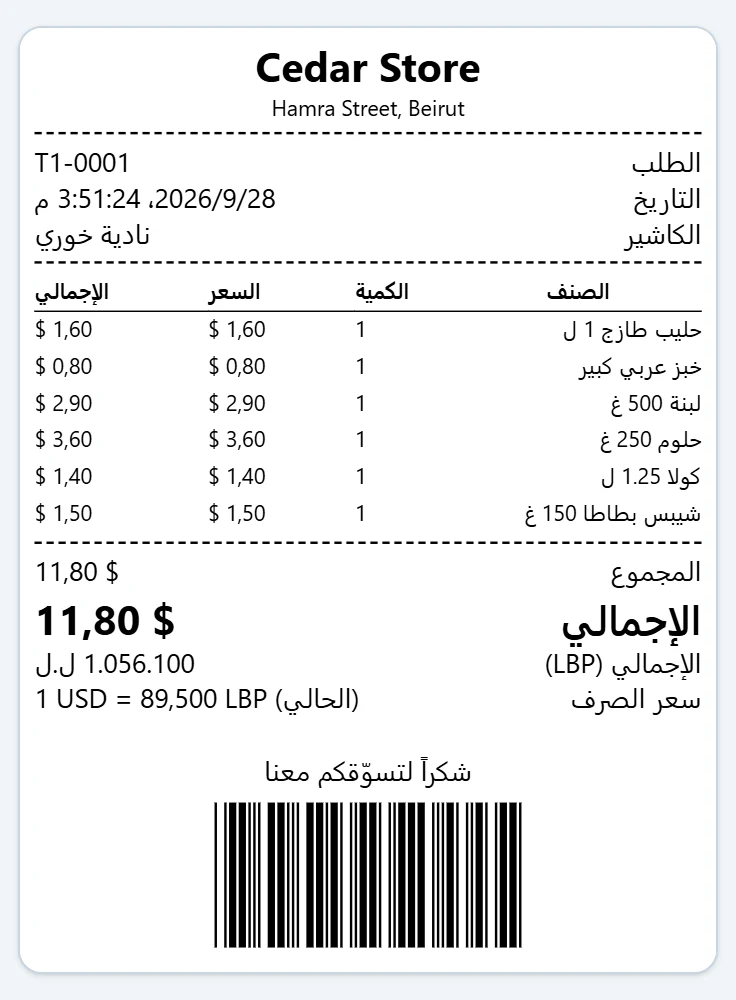
A receipt from the till in Arabic: six items, 11.80 dollars, 1,056,100 lira, the exchange rate and a barcode.

Arabic receipts that actually print

Receipts reach the thermal printer as an image, so Arabic letters join and read the right way round, even on cheap printers with no Arabic character set at all.
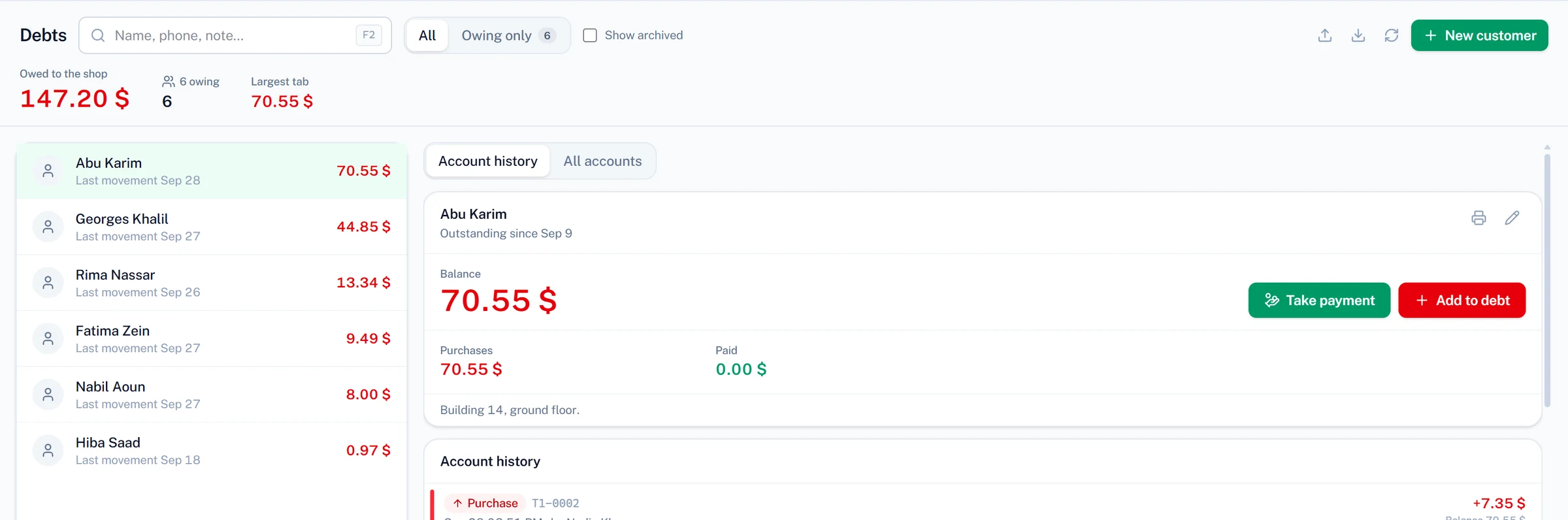
The debt book: customers with what each one owes, and one customer's account history.

The debt book

Who owes what, paid off or written off, with the whole history.
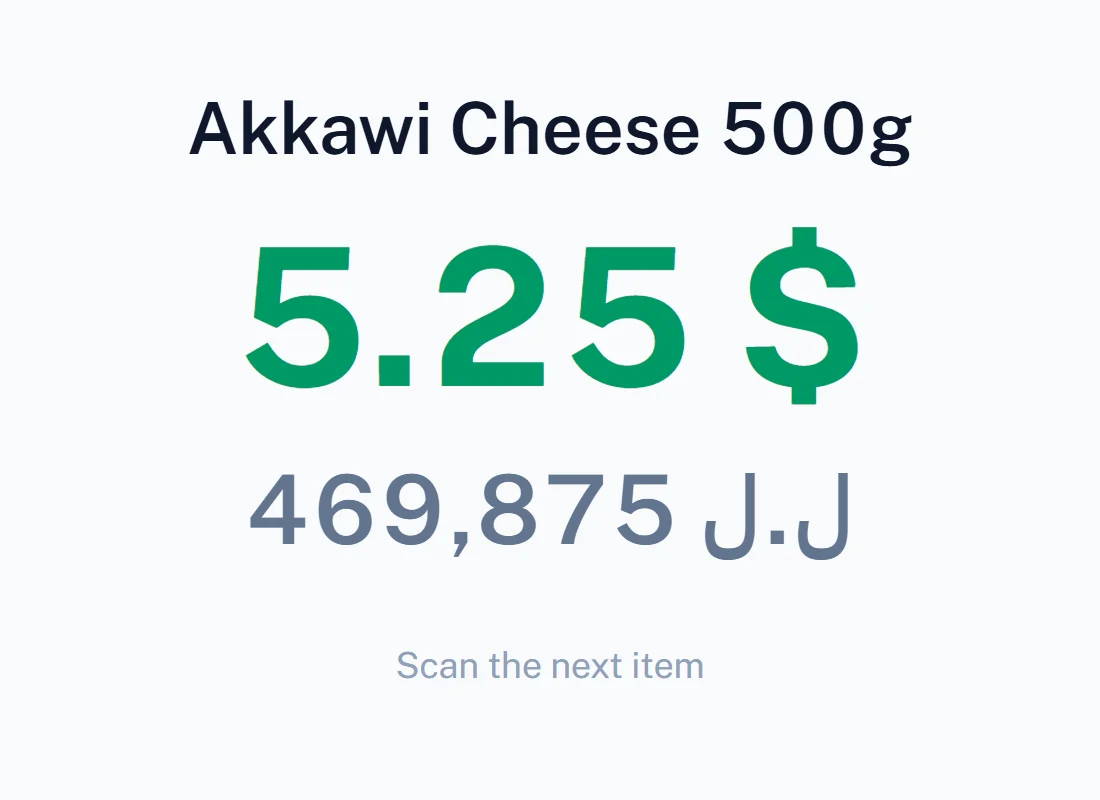
Price check: Akkawi Cheese 500g, 5.25 dollars, 469,875 lira.

A price checker on the shelf

A spare machine answers “how much is this?” so nobody rings up an item just to ask. It has its own licence, priced below a till.
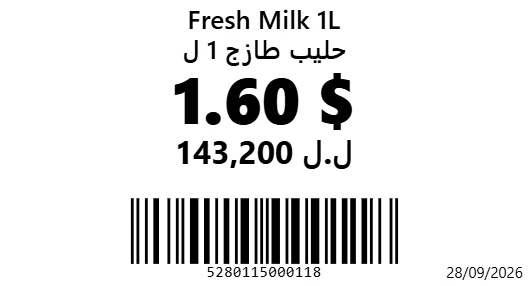
A shelf label for Fresh Milk 1L: the name in English and Arabic, 1.60 dollars, 143,200 lira, and a barcode.

Shelf labels

Both names, both currencies and the barcode, from the same catalogue.
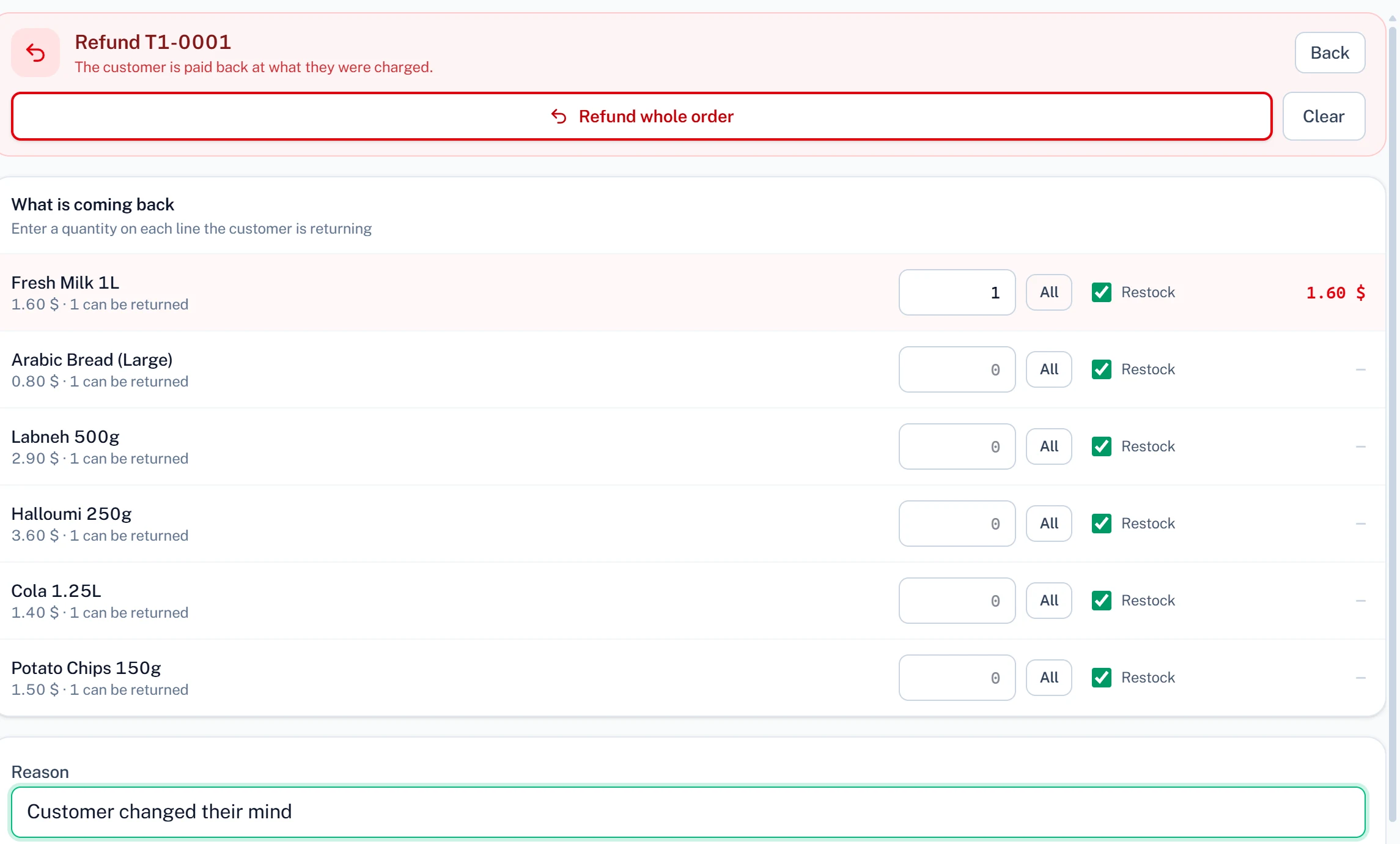
A refund: each line of the order with its own quantity to return and a restock switch, and a reason.

Refunds line by line

Pick what is coming back, put it back on the shelf or not, and say why.
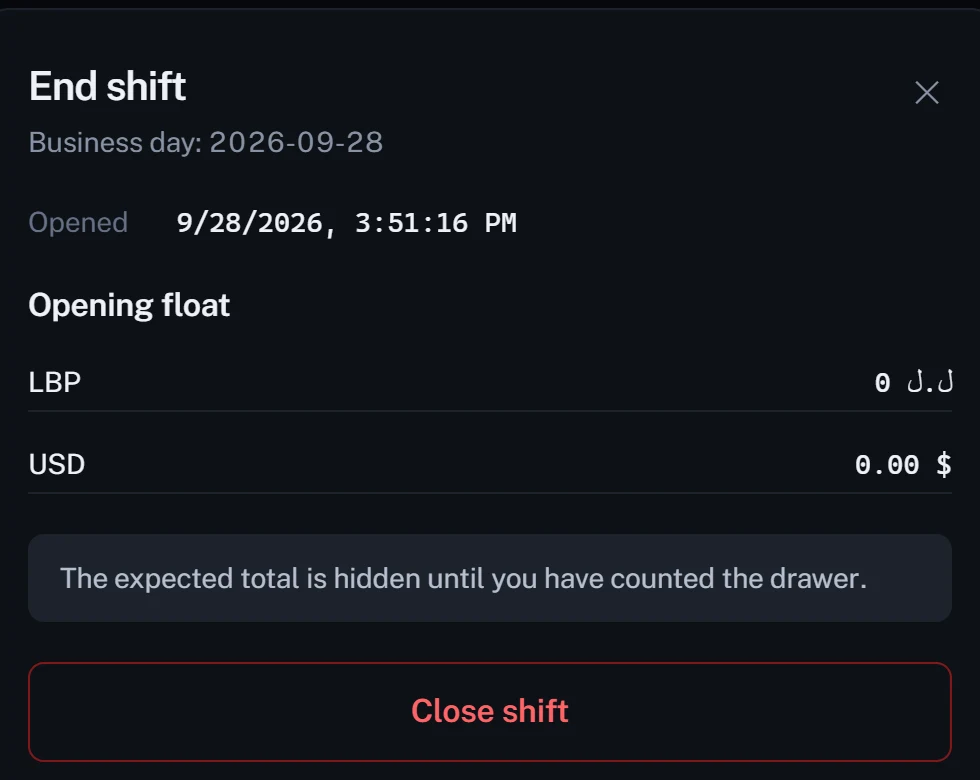
Closing a shift: the expected total is hidden until the drawer has been counted.

Shifts, PINs, and who did what

Every discount, refund and drawer movement carries a name and a time, and blind close is a switch rather than an argument.

Built to keep the shop open.

  • Pull the plug mid-sale. Nothing breaks.

    Proven by yanking the power out, repeatedly, in the middle of a transaction. No half-written orders, no drifted stock.

  • Backed up at every shift close

    And on demand, so the shop is never more than one shift from where it was. Restore onto a new machine and carry on.

  • A second till on a busy day

    Up to eight machines share one catalogue over the shop’s own network, each with its own printer, drawer and shift.

  • Start from the supplier’s own list

    Import the whole catalogue from a spreadsheet, and export it back whenever you like.

  • Your data stays in the shop

    Sales, customers and prices live on your own machine. We hold only what is needed to license the software to you.

  • We set it up with you

    The catalogue, the printer, the drawer, the cashiers. And we stay on the message until the first real day has gone through cleanly.

Pay monthly, yearly, or own it outright.

No cut of your takings, no per-transaction fee, no charge that grows because you had a good week. The till is yours to run.

Monthly

$20per till, per month

Pay as you go. Stop whenever you like; your data stays on your machine either way.

Yearly

$200per till, per year

Two months free against monthly

The same thing, settled once a year, for a shop that would rather not think about it again until next year.

Lifetime

Launch price

$350one payment, per till

Until 31 December 2026. The price goes up in January 2027.

Buy the licence outright and it does not expire. No renewal to forget.

Prices are per till, in US dollars. A price checker has its own licence, for less than a till. Running more than one till? Ask, and we will tell you straight: the price does not change based on who is asking.

The dashboard (seeing your takings on a phone) is a separate subscription, and it is not part of the licence, lifetime included. The till sells with or without it.

The questions every shop asks first.

Something else? Ask us on WhatsApp

What do I need to run it?
A Windows 10 or 11 machine at the counter; a modest one is fine. A thermal receipt printer and a barcode scanner if you want them, and a cash drawer that the printer can open. If you already have those, they most likely work as they are.
Can you move my products over from what I use now?
Yes. If you can get your catalogue out as a spreadsheet, or your supplier already sent you one, that is enough to open with. Import it, check it on screen, and start selling.
What happens if the computer dies?
Backups run at every shift close and on demand, so the shop is never more than one shift from where it was. Restore onto a new machine and carry on. Because nothing depends on our servers, there is no account to recover and nobody to wait for.
Do you install it, or am I on my own?
We set it up with you (the catalogue, the printer, the drawer, the cashiers and their PINs) and stay on the message until the first real day has gone through cleanly.
Does it really work with no internet?
Yes, and that is the point rather than a fallback mode. The whole shop runs on the machine at the counter, so a dropped line changes nothing about ringing up a sale, printing a receipt or opening the drawer.
Is my data on your servers?
No. Your sales, your customers and your prices live on your own machine. We hold only what is needed to license the software to you.

Come and watch it ring up a sale.

Tell us what you sell and how people pay you, and we will put a basket through the till in front of you, in your language, on your counter.

+961 70 945 378